

Introduction
In an era defined by rapid technological advancement and optical precision, industries constantly seek innovative tools to enhance data capture, visualization, and measurement accuracy. Central to this pursuit of excellence is prizmatem, a specialized concept representing the cutting edge of modern optical engineering and system integration. Whether you are an optical engineer, a tech enthusiast, or an industry professional looking to upgrade your technical framework, understanding these sophisticated systems is vital for maintaining a competitive edge. Traditional optical configurations often struggle with light dispersion, calibration drift, and limited environmental adaptability, making modern architectural improvements more critical than ever. By integrating advanced refraction principles and high-grade materials, developers can achieve unprecedented clarity and measurement stability across diverse applications. The primary intent behind exploring this subject is to uncover how modern optical solutions elevate precision work, streamline complex workflows, and deliver reliable results in demanding environments. As industrial standards tighten and technological demands evolve, embracing these advanced mechanisms ensures both operational efficiency and long-term project success.
Table Section
Understanding the Fundamentals of Optical Refraction
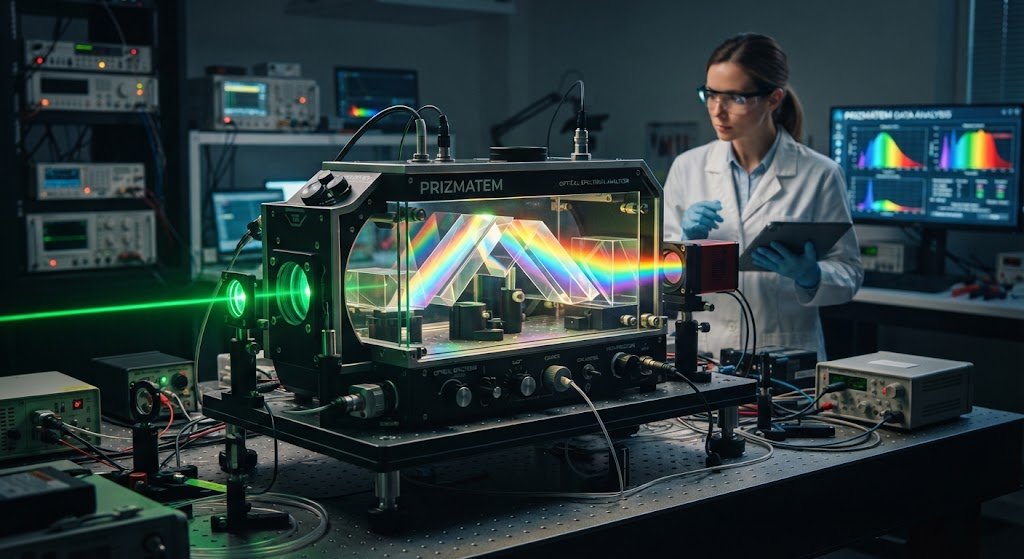
The foundational operation of advanced optical tools relies on precise light manipulation, geometric angles, and material purity to control photon pathways effectively. When light waves enter a specialized high-index medium, they bend and separate according to precise mathematical laws that engineers must calculate down to the micrometer. This meticulous control prevents scattering and ensures that optical signals retain their integrity even over extended transmission distances or through challenging atmospheric conditions. Modern manufacturing techniques utilize computer-aided design to mold elements with exceptional surface smoothness, virtually eliminating micro-imperfections that traditionally degraded image quality. Furthermore, specialized anti-reflective coatings applied to the surfaces maximize light transmission and reduce glare, enhancing overall system performance significantly. By mastering these foundational optical principles, technicians can design setups that operate with maximum efficiency and minimal energy loss. These engineering triumphs lay the groundwork for high-precision instruments used in scientific research, telecommunications, and advanced manufacturing sectors worldwide.
Industrial Applications and Precision Engineering
Modern manufacturing environments demand uncompromising accuracy, making specialized optical components indispensable for quality control, alignment, and automated inspection tasks. Assembly lines rely on high-precision alignment tools to verify that components fit together within microscopic tolerances, preventing costly production defects before they reach final packaging. In aerospace and defense engineering, optical tracking systems utilize sophisticated refraction arrays to monitor moving targets with extraordinary speed and dependability. These systems must perform flawlessly under extreme temperatures, heavy vibrations, and exposure to corrosive elements without losing their calibration. Integrating robust optical solutions into industrial machinery also facilitates automated feedback loops, allowing robotic arms to adjust their positioning dynamically based on real-time visual data. Consequently, factories experience reduced downtime, lower scrap rates, and vastly improved production throughput across all shifts. The deployment of these tools bridges the gap between theoretical physics and practical, profit-driven industrial execution.
Enhancing Data Transmission and Telecommunications
Telecommunications networks form the invisible backbone of modern global communication, relying heavily on fiber optics and light-based signal routing to move massive amounts of data. Advanced prism-based routing modules help split, combine, and direct laser signals through complex fiber networks with minimal attenuation and signal degradation. As global data consumption surges due to cloud computing, streaming services, and artificial intelligence, network infrastructure requires increasingly sophisticated light management tools. Traditional electronic switches often create bottlenecks and generate excess heat, whereas optical routing systems handle high-frequency data streams instantly and efficiently. Engineers use specialized refraction setups to multiplex multiple wavelengths over a single fiber strand, dramatically multiplying the network’s carrying capacity without laying new cables. This capability is especially crucial for submarine cables and transcontinental data lines where physical maintenance is exceptionally difficult and expensive. Ultimately, optimizing light paths through precision engineering ensures faster, more stable internet connectivity for millions of users worldwide.
Innovations in Scientific Research and Laboratory Equipment
Scientific discovery frequently depends on the ability to observe microscopic phenomena or distant celestial bodies with absolute clarity and zero distortion. Laboratories around the globe utilize advanced optical assemblies in spectrometers, microscopes, and telescopes to analyze chemical compositions and map distant star systems. By splitting light into its constituent wavelengths through controlled refraction, researchers can identify the exact chemical fingerprints of unknown substances in seconds. Recent innovations have introduced compact, modular optical units that fit easily into portable diagnostic devices, bringing laboratory-grade analysis directly into the field. Medical researchers benefit immensely from these developments through enhanced imaging modalities like optical coherence tomography, which provides non-invasive cross-sectional views of biological tissues. These diagnostic breakthroughs enable early disease detection and improve patient outcomes through safer, more accurate clinical evaluations. As scientific instruments become more sensitive, the demand for flawless optical components continues to drive unprecedented technological growth.
Overcoming Calibration and Maintenance Challenges
Despite their impressive performance capabilities, high-precision optical systems require meticulous calibration and routine maintenance to prevent environmental degradation over time. Dust accumulation, moisture ingress, and thermal expansion can subtly shift optical alignments, leading to measurement errors if left unaddressed by technicians. Facility operators must implement strict cleaning protocols using lint-free materials and optical-grade solvents to protect delicate anti-reflective coatings from scratching or chemical damage. Additionally, modern engineering addresses thermal drift by housing optical assemblies in temperature-controlled enclosures or using low-expansion glass substrates like quartz. Automated self-calibration routines embedded in modern software packages can also detect minor alignment variances and compensate for them digitally without manual intervention. Regular preventive maintenance schedules guarantee that expensive optical equipment retains its peak accuracy and achieves a maximized operational lifespan. Proactive care safeguards the initial capital investment and prevents unexpected equipment failures during critical project phases.
The Integration of Digital Software and Smart Optics
The convergence of traditional optics with modern digital software has transformed passive glass components into active, intelligent systems capable of adaptive performance. Smart optical modules now incorporate micro-actuators and digital sensors that adjust focal lengths and alignment angles automatically based on environmental feedback. Software algorithms analyze captured light data in real time, filtering out ambient noise and sharpening images instantly for the end user. This digital integration simplifies complex operational procedures, allowing technicians with minimal optical training to achieve professional-grade measurement and visualization results. Furthermore, cloud-connected optical systems enable remote diagnostics and firmware updates, reducing the need for costly on-site service visits by specialized engineers. As machine learning models become more sophisticated, smart optical devices will increasingly predict calibration needs and optimize their own settings autonomously. This seamless synergy between hardware and software represents the future horizon of optical engineering and industrial automation.
Future Trends and Sustainable Manufacturing Practices
Looking toward the horizon, the optical technology sector is shifting rapidly toward sustainable manufacturing methods and eco-friendly material sourcing to reduce environmental impact. Forward-thinking companies are redesigning production supply chains to minimize hazardous chemical waste during glass etching and coating deposition processes. Researchers are also exploring biodegradable polymers and recycled glass alternatives that offer comparable optical clarity to traditional mineral substrates without the heavy ecological footprint. Energy efficiency remains a primary design driver, with developers creating passive optical components that require zero electrical power to route and filter light signals. Additionally, miniaturization trends allow manufacturers to pack powerful optical arrays into smaller, lighter form factors suitable for wearable technology and compact mobile devices. These forward-looking initiatives ensure that the optical industry can support growing technological demands while protecting the planet’s finite natural resources. Embracing sustainable innovation secures a responsible and prosperous future for next-generation optical engineering.
FAQs
What is the primary function of an advanced optical prism system?
It is designed to refract, disperse, and route light beams with extreme precision, enabling accurate measurements, clear imaging, and efficient data transmission across various industries.
How do smart optical systems differ from traditional setups?
Smart systems integrate digital sensors, micro-actuators, and software algorithms to adjust focus, correct alignment drift, and analyze data automatically in real time.
Why is optical calibration critical in industrial manufacturing?
Maintaining precise calibration ensures that measurements remain accurate, preventing costly assembly defects, alignment errors, and production downtime on the factory floor.
Can optical components withstand harsh working environments?
Yes, modern industrial-grade optical components are built using ruggedized materials and protective coatings to resist extreme temperatures, vibrations, moisture, and dust.
How do these optical technologies impact telecommunications?
They allow network operators to split, combine, and route high-frequency laser signals through fiber optic cables efficiently, dramatically increasing data capacity and speed.
Conclusion
Navigating the intricacies of modern optical engineering requires a delicate balance of precise mechanics, innovative materials, and intelligent software integration. As we have explored throughout this guide, advanced optical systems serve as the critical foundation for high-precision manufacturing, scientific research, and global telecommunications. By investing in robust optical solutions, organizations can elevate their measurement accuracy, streamline operational workflows, and future-proof their technological infrastructure. However, hardware excellence must be paired with diligent maintenance, proper calibration, and a commitment to sustainable manufacturing practices. Every technological refinement in light manipulation brings industries closer to absolute efficiency and flawless execution. Embracing these progressive tools today ensures that businesses and researchers remain at the forefront of innovation for years to come.