

Introduction
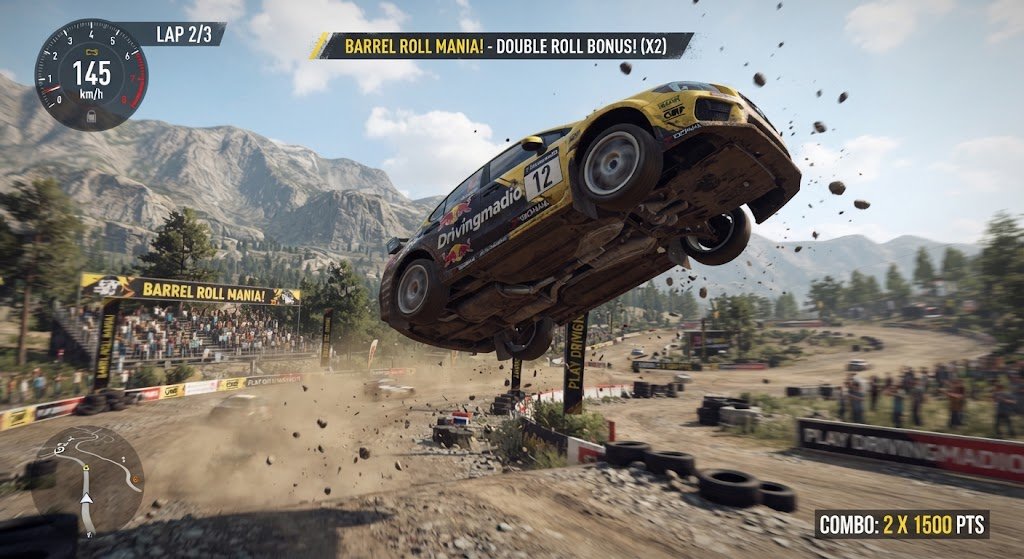
Online browser gaming has evolved dramatically, offering players instant access to high-octane physics simulations and stunt challenges directly from their web browsers. Among the most thrilling trends in casual gaming platforms is the combination of intense vehicle handling and gravity-defying acrobatic maneuvers. Players constantly search for specific gameplay feats that test their reflexes, precision timing, and understanding of virtual momentum. One such engaging query brings thrill-seekers to experience Drivingmadio Do a Barrel Roll 2 Times, pushing arcade driving physics to their absolute limits.
When gamers look up this specific stunt challenge, they are usually hunting for precise tactical execution methods to master tricky ramps, loops, and obstacle courses without crashing. Successfully completing mid-air rotations requires more than just holding down the acceleration key; it demands an intricate feel for weight distribution, ramp angles, and air control. Whether you are trying to impress friends or beat your personal best score, understanding how your vehicle behaves in a weightless state is the key to consistent success.
This comprehensive guide breaks down everything you need to know about mastering vehicle stunts, optimizing your control inputs, and navigating demanding digital tracks like a seasoned pro. We will explore the physics engine mechanics behind aerial flips, tactical approaches to difficult obstacles, and proven ways to boost your overall gaming performance. Strap in and get ready to elevate your virtual driving skills to professional heights.
Game Overview and Stunt Mechanics
Mastering the Physics of Virtual Momentum
Understanding how momentum works in browser-based driving games gives players a massive competitive edge over casual competitors. Every vehicle in these simulations possesses simulated mass, friction, and center of gravity coefficients that dictate its physical reactions. When you launch off a high-speed ramp, the car inherits the linear velocity from the ground and translates it into rotational force depending on the ramp profile.
If you hit a wedge-shaped ramp at a slight angle, the chassis naturally begins to tilt along its roll axis, initiating the spin. Players must learn to read the geometry of upcoming obstacles well in advance to anticipate how their car will react in mid-air. Adjusting your speed just milliseconds before leaving the launchpad ensures you achieve the exact height and rotational velocity needed to complete your flips cleanly.
Moreover, friction coefficients on different track surfaces change how much traction you have right before takeoff. Slick tarmac allows for maximum speed build-up, while off-road or metallic stunt tracks might require different acceleration timing. Mastering these subtle momentum shifts transforms chaotic, accidental crashes into predictable, high-scoring aerial acrobatics.
Essential Keyboard Controls and Timing Strategies
Precise input management separates amateur drivers from elite stunt coordinators in browser racing games. Most titles rely on intuitive keyboard layouts, typically utilizing the arrow keys or WASD configurations to control throttle, braking, and steering pitch. When executing complex aerial maneuvers, every keystroke must be deliberate and measured rather than frantic and heavy-handed.
Timing your initiation inputs is critical; tapping the steer key a fraction of a second too late results in an incomplete rotation and a catastrophic crash upon re-entry. Conversely, holding directional keys down for too long causes the vehicle to over-rotate, landing upside down and destroying your combo multiplier. Developing muscle memory for these inputs requires patient practice across various tracks and vehicle classes.
Advanced players also utilize mid-air braking or acceleration to subtly alter their car’s pitch while airborne. Pressing the reverse key in mid-air can help tilt the nose upward if the vehicle is dipping too low, ensuring a flat, four-wheel touchdown. Combining these micro-adjustments with smooth steering inputs allows for flawless execution every single time.
Navigating High-Speed Ramps and Launchpads
Ramps serve as the primary gateways to aerial stunts, acting as launchpads that fling vehicles across gaping chasms, loops, and obstacles. Approaching these structures requires a delicate balance between maximum velocity and absolute vehicle control. Slamming the throttle down blindly often leads to misaligned entries, causing the car to veer off the side of the ramp before achieving liftoff.
Course designers frequently place sharp turns or narrow corridors immediately before major ramps, testing the player’s ability to correct trajectory under pressure. Drifting or feathering the brakes through the approach corner sets the car up squarely in the center of the ramp. This centered alignment guarantees that the upward force is distributed evenly across both sides of the vehicle.
Once airborne, maintaining visual focus on the landing zone is just as important as the launch itself. Anticipating the distance to the ground helps you gauge whether you need to accelerate your rotation or level out early. By treating every ramp as a calculated physics equation rather than a random jump, you drastically improve your survival and success rate.
Vehicle Selection and Customization Insights
Different cars within browser stunt titles handle drastically different weight classes, top speeds, and suspension stiffness ratings. Choosing the right vehicle for a specific stunt track can mean the difference between a smooth landing and a fiery wreck. Heavy muscle cars offer stability and momentum through loops, while lightweight sports cars excel at rapid acceleration and tight aerial corrections.
Upgrading your vehicle’s stats—if the game mode permits—allows you to fine-tune handling characteristics to match your personal playstyle. Upgraded suspension systems absorb heavy impacts much better, preventing the chassis from bouncing uncontrollably upon landing. Similarly, enhanced engine power gives you the extra velocity needed to clear massive gaps that standard vehicles cannot cross.
Experimenting with various vehicle classes across different maps helps you understand their unique physical limitations. If a particular stunt feels impossible to clear, switching from a heavy cruiser to a nimble lightweight chassis often provides the extra agility required. Always match your ride to the architectural demands of the course you are tackling.
Overcoming Common Stunt Failures and Crashes
Every virtual stunt driver experiences frustrating crashes, missed landings, and unexpected vehicle flips while learning advanced maneuvers. The most common cause of failure is over-acceleration, which causes drivers to overshoot landing zones or misjudge rotation speeds. Analyzing why a crash occurred rather than simply hitting the restart button is vital for skill development.
If your car consistently lands on its roof, you are likely initiating your spin too late or holding the rotation keys past the optimal threshold. Practice releasing your directional inputs earlier to let natural gravity and momentum finish the final degrees of rotation smoothly. Adjusting your camera angle—if multiple perspectives are available—can also provide better depth perception for landing zones.
Another frequent pitfall is ignoring the rebound physics upon touching the ground after a complex maneuver. Hitting the tarmac at an awkward angle requires immediate counter-steering and slight braking to stabilize the chassis. Cultivating patience and learning from trial-and-error builds the resilient mindset needed to conquer the toughest tracks.
Advanced Tips for High-Scoring Gameplay
Maximizing your score and style ratings in stunt-based driving games requires stringing multiple maneuvers together into fluid, continuous combos. Instead of executing isolated tricks, elite players combine drifts, jumps, and flips into seamless sequences that multiply point yields. This requires memorizing track layouts so you can anticipate upcoming stunt opportunities well in advance.
Utilizing environmental props such as half-pipes, wall-rides, and secondary booster pads can add extra rotation momentum to your vehicle. Hitting a booster pad right before a jump injects raw velocity that makes complex multi-rotational maneuvers much easier to execute. Keep an eye out for hidden shortcuts or alternative elevated paths designed for skilled stunt drivers.
Finally, maintaining consistency across multiple runs matters more than pulling off a single lucky stunt. Focus on smooth, repeatable lines that minimize errors and keep your vehicle operating at peak efficiency. By combining technical precision with tactical track awareness, you will dominate leaderboards and master every challenge thrown your way.
Frequently Asked Questions
-
What are the basic controls for performing stunts in browser driving games? Most games use the WASD keys or arrow keys to manage acceleration, braking, steering, and mid-air vehicle pitch adjustments.
-
How can I prevent my car from crashing upon landing? Ensure your vehicle is leveled parallel to the ground before touching down, and use minor steering corrections to stabilize the chassis immediately upon impact.
-
Why does my car flip uncontrollably off ramps? Over-steering during takeoff or hitting the ramp at an uncentered angle usually causes erratic spinning and loss of control in mid-air.
-
Are different vehicles better suited for specific stunt courses? Yes, lightweight cars offer superior aerial agility, while heavier vehicles maintain better straight-line momentum and stability through rough terrain.
-
How do I practice difficult jumps without losing progress? Utilize the game’s instant restart feature to repeat challenging sections immediately, allowing you to fine-tune your approach speed and timing through trial and error.
Conclusion
Mastering complex vehicle stunts in browser-based driving games is a rewarding journey that combines quick reflexes, strategic planning, and a solid grasp of physics. Throughout this guide, we have explored the essential mechanics behind vehicle momentum, optimal keyboard controls, ramp execution strategies, and advanced scoring techniques. Whether you are navigating intricate obstacle courses or perfecting your aerial rotations, patience and practice remain your greatest assets.
The thrill of digital stunt driving lies in pushing virtual boundaries and turning impossible-looking gaps into routine successes. By understanding how vehicle weight, speed, and environmental design interact, you transform every session from a game of chance into a display of skill. Implement these expert insights, refine your control timing, and approach every track with confidence.
As you continue to test your limits and explore new gaming challenges, remember that consistency and adaptability are what separate casual players from true stunt experts. Keep practicing, analyze your mistakes, and enjoy the adrenaline rush of conquering the most demanding courses. Your journey toward ultimate virtual driving mastery starts with every single launch off the ramp.